By Gosia Lewalski
Photos Patrycja Maziarz
WHEN Bradford’s first Polish school opened in 1948 it was the very first of its kind in the UK – founded to nurture Polish identity and patriotism in the aftermath of the Second World War.
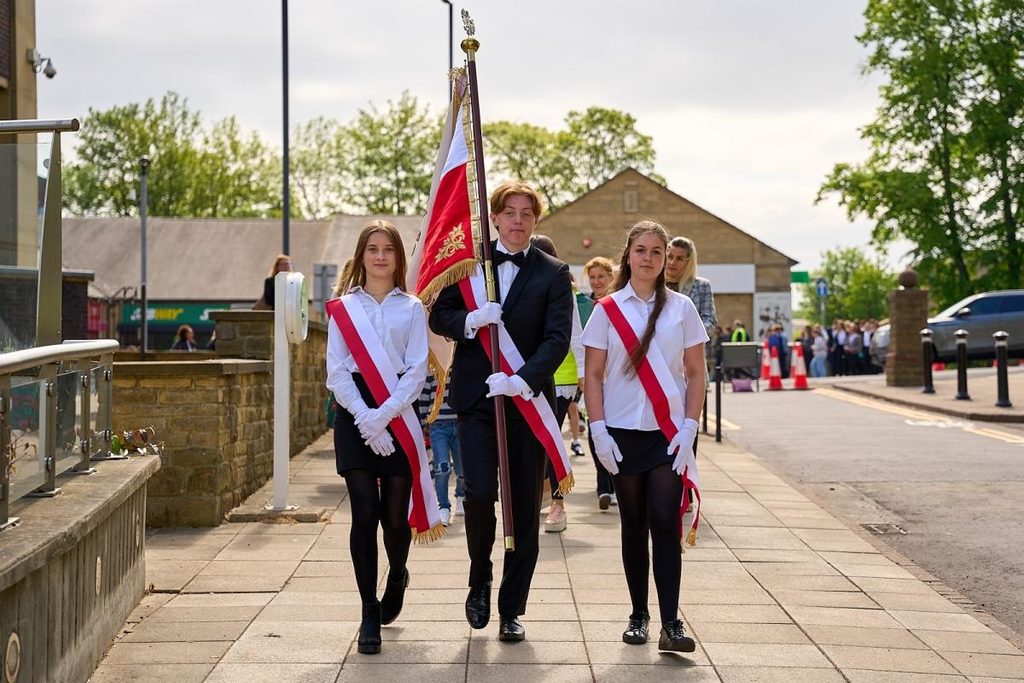
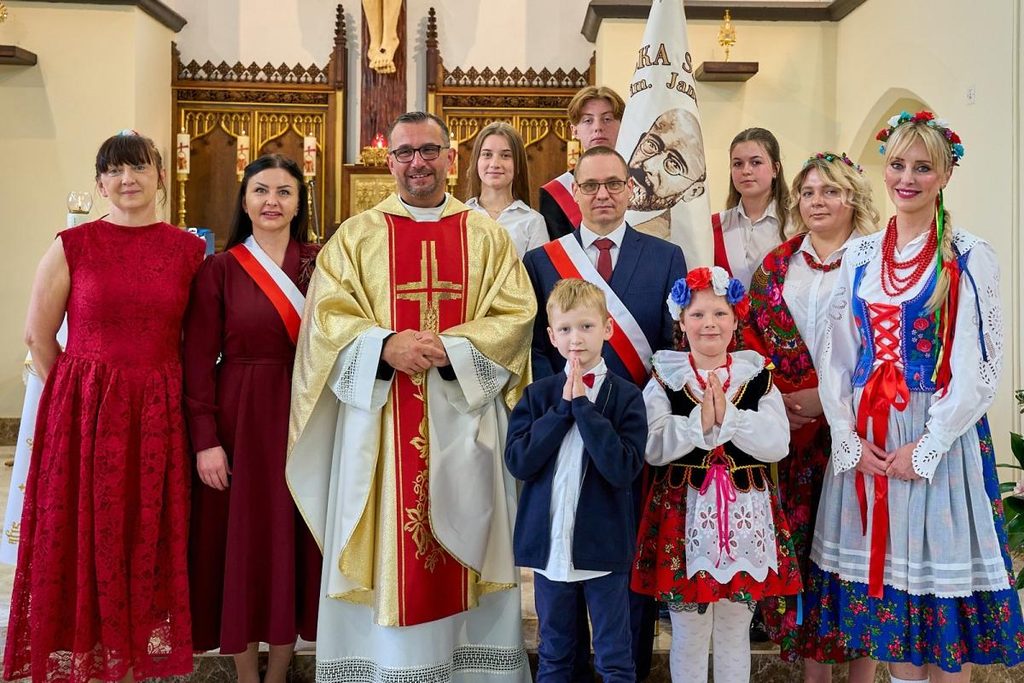
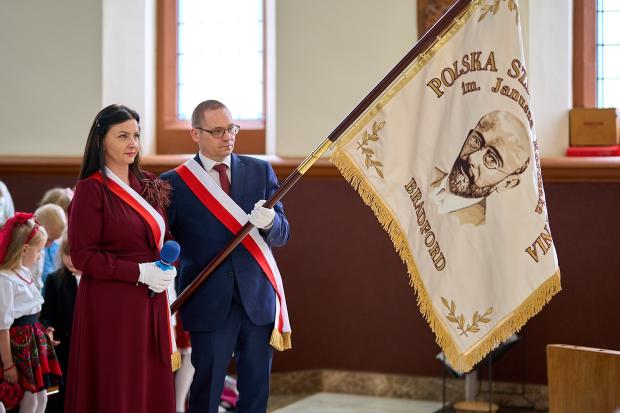
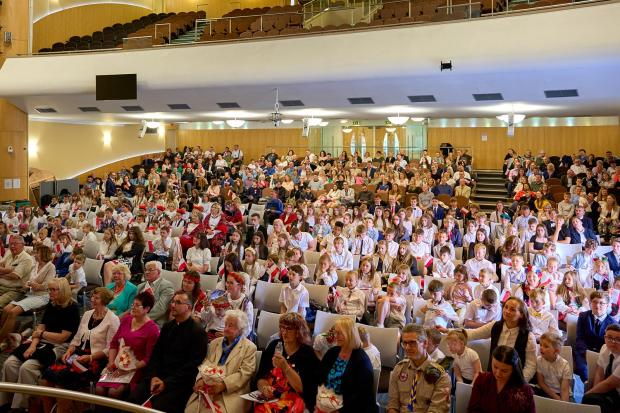
Bradford’s Polish community recently gathered to celebrate a milestone – the 77th anniversary of Polish education in the city. The anniversary celebrations began with a Mass at Our Lady of Częstochowa Church on Edmund Street. Priest Waldemar Hareza blessed a new flag for the Polish Saturday School, named after Janusz Korczak – a symbol of the school’s enduring tradition and spirit.
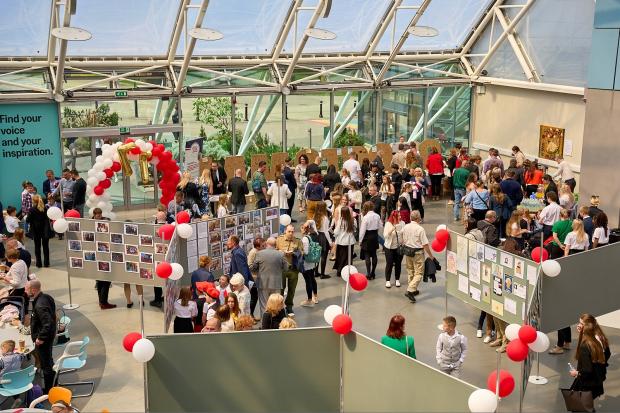
A celebration event at the University of Bradford featured an exhibition of students’ artwork, photographs from the school’s history and a photo series by Bradford photographer Tim Smith capturing the city’s vibrant Polish community.
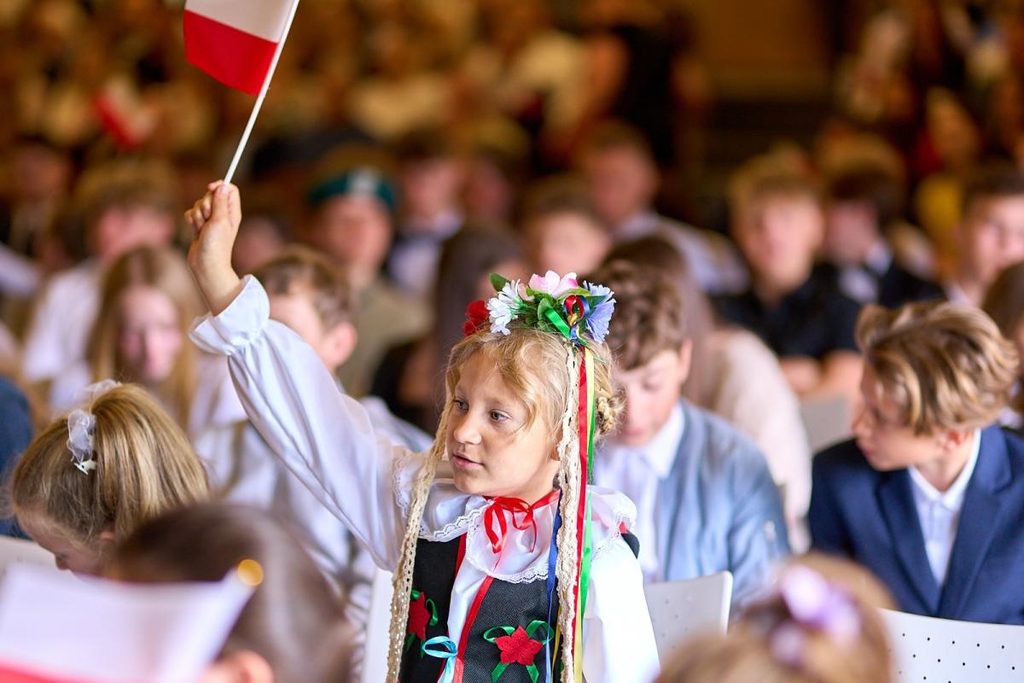
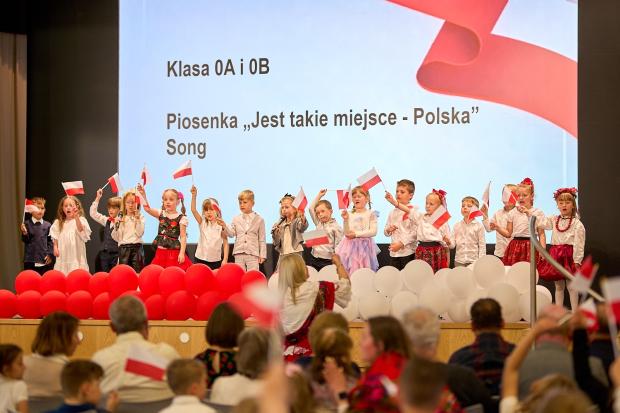
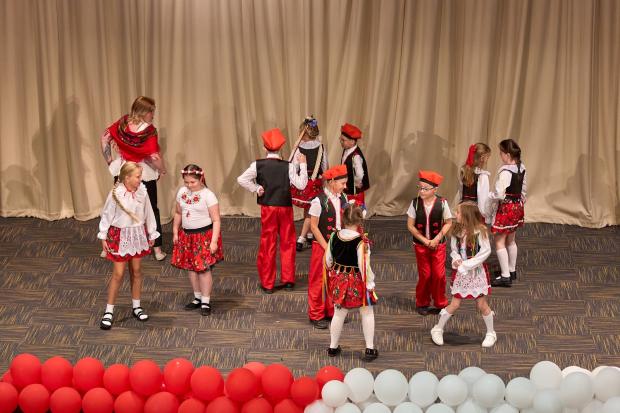
Headteacher Mrs Anna Czaban welcomed guests, who viewed excerpts from interviews with former headteachers and current students. There were performances by students, from pre-school to A-levels, including traditional Polish dances in national costume, songs, including the school’s new anthem, and poetry recitations.
A highlight was the Polonez dance, elegantly performed by the oldest students. Often seen at school proms, this Polish dance symbolises maturity and the transition into adulthood.
The event concluded with a celebratory cake shared among students, parents, staff, and the parent council. Everyone sang Sto Lat, the Polish birthday song. A brochure chronicling the history of Polish education in Bradford was distributed.
The Polish school was established to instil in the younger generation a love for Poland, the language, history and culture, and to nurture a sense of national identity. Many Poles had travelled a very long journey before arriving on British soil, often dreaming of returning to a free Poland.
SPK Native School in Bradford was founded on February 12, 1948, initiated by then-president of the SPK branch, Mr S Kwiatkowski. Only nine children attended, the care of this small group was entrusted to Mrs Rogalewicz and Mrs Wysocka, with lessons held in the Veterans’ House.
The number of pupils increased year by year – at its peak, the number was around 350 – and the school moved to St Joseph’s English Catholic School. In 1953 the school moved to a house at Neal Street, adopting the new name Polish School. A Club of Friends of Children and Youth was organised and a Parent Committee collaborating with the SPK.
In 1954 the second Polish school was established in a parish school renting premises of St Patrick’s Primary School.
In 1962, as a result of misunderstandings, two Polish schools were established. The SPK school remained on Neal Street, with only 10 children, but after just one year numbers increased and the school rented a building on Drummond Street. In 1968 the two Polish schools united as Polish Saturday School of St Stanislaus Kostka, and 200 students began the new school year there, from kindergarten to A-levels. Principal Mieczysław Kipp wrote in his memoirs: “The work and activities of the school must continue because it is a fight for the heart and soul of the Polish child abroad, a fight we cannot afford to lose”.
Over the years, the buildings that housed the Polish schools changed owners. It is a deeply sentimental experience to revisit, in our memories, the places where Polish language lessons and history classes used to take place.
foto_08
From 1978-1988, the school was run by Andrzej Borowy, a former student of the Polish school. In his memoirs, published on the 40th anniversary, he wrote about a new generational shift – children whose parents were born in Britain began to attend the school. Former graduates of Polish Saturday schools became teachers. Later, the Hocki Klocki group was founded, performing at various events, a source of great pride. The number of pupils kept growing and classes for older students were held on Friday evenings. In 1984, a building adjacent to the parish club was purchased and parishioners renovated it, supervised by Father Bronisław Gostomski. The work lasted several years and finally, on September 5, 1991, the parish handed over the first floor for use by the school.
From 1997 the school was under Barbara Mark’s leadership for over 16 years. It was a time of a new wave of emigration, by 2004 the school had gradually filled with children who came with their parents from Poland. Mrs Mark developed the school, hiring young teachers who came to Britain in search of work.
When Krystyna Davidson became headteacher the school had 145 students. She enriched the school experience, creating a reading corner, introducing geography and history lessons, a discussion club and themed trips.
In 2019 a new Polish school was established, Janusz Korczak Polish Saturday School, with headteacher Anna Czaban. By 2022 there were 280 students. Unfortunately, the UK’s exit from the EU led to a decline in children attending Polish schools across the country, as many returned to Poland.
The 77th anniversary is a poignant reminder of the vital role of education in preserving cultural heritage. Today the Janusz Korczak Polish Saturday School has more than 240 pupils – final-year students have for years achieved the highest results in Polish language A-levels and a cherished school tradition is the Studniówka, a prom-style celebration held 100 days before the exam.
The school remains a cornerstone of Bradford’s Polish community. It continues to foster the Polish language, traditions and history, building bridges between past and future generations.